
AI Avatars: Why Intelligent Systems Need Identity
Intelligence can produce an answer in milliseconds, yet an answer alone rarely earns durable trust. AI avatars give intelligent systems a recognizable identity, expressive range, and behavioral continuity. That combination matters when a game studio needs memorable NPCs, an IP owner needs character fidelity, or an enterprise needs a consistent representative across digital surfaces. A face is not decoration. It is an interface for intent, context, and accountability.
See embodied characters in action: explore Genies Chat and talk with animated AI personas in real time.
The shift from text-only systems to embodied characters changes the design question. Teams are no longer asking only whether an AI can generate a useful response. They are asking whether it can show up as the same character, carry the right tone, and act within clear boundaries. That is where visual identity, behavior, and intelligence must work as one system.
AI avatars turn intelligence into recognizable identity
AI avatars are embodied interfaces for intelligent systems. They combine a stable visual identity with voice, movement, expression, behavior, and contextual intelligence.
A text interface can be efficient, but it strips away much of the information people use to interpret communication. Facial expression, posture, timing, and vocal delivery all shape meaning. An avatar can carry those signals while giving the underlying intelligence a consistent way to appear.
Consistency is the strategic value. A character should remain recognizable across a game session, a live fan interaction, and a branded app. Its appearance can change with context without losing its defining traits. Its behavior can adapt without drifting away from the identity that users recognize.
Embodiment is a system, not a skin
Placing an animated model beside a chatbot does not create a credible persona. The model, animation, voice, memory, and decision logic must support the same identity. If those layers disagree, users notice immediately. A confident visual style paired with hesitant language creates friction. So does a familiar character that forgets its core motivations.
Strong embodiment aligns what a character looks like with how it speaks and behaves. Research on embodied avatars and social presence suggests that visual and nonverbal cues can increase perceived closeness in digital communication. The practical lesson is clear: every expressive cue should serve character intent.
Identity creates continuity
A stable identity makes an intelligent character easier to recognize and evaluate. Users can compare current behavior with prior interactions. Developers can define tests for character fidelity. IP owners can establish rules for voice, appearance, and acceptable conduct. Enterprise teams can connect every interaction to governance standards.
Visual continuity: recognizable proportions, styling, expression, and motion across surfaces.
Behavioral continuity: reliable tone, mannerisms, priorities, and response boundaries.
Contextual continuity: memory and situational awareness that support relevant interaction.
Operational continuity: clear rules for moderation, rights, safety, and performance.
Genies approaches this challenge as an AI avatar technology company focused on the visual and embodiment layer for AI. The aim is not a face attached to a model. It is a complete persona that can look, think, behave, and play with a coherent identity.
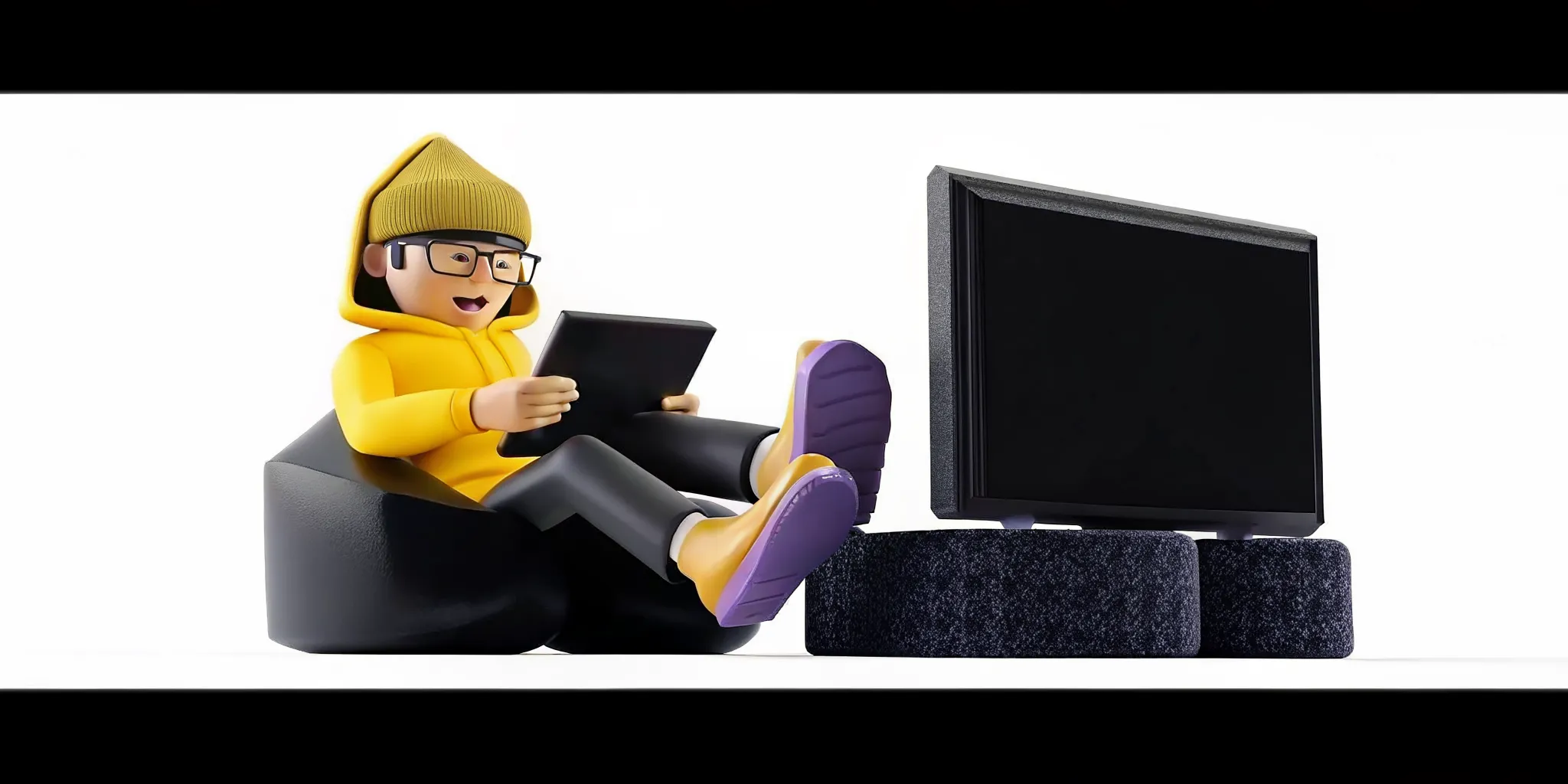
A durable AI avatar identity remains recognizable while adapting to the rules and context of each digital environment.
Why faceless AI struggles to build trust
Faceless AI lacks the visual and behavioral signals people use to assess intent. An embodied identity can make those signals legible, consistent, and easier to govern.
Trust does not come from visual polish alone. It develops when a system behaves predictably, communicates its role, and responds in ways that fit the moment. Embodiment gives people more evidence to assess. A user can notice whether expression matches language, whether tone fits context, and whether the same identity returns later.
Text-only systems often flatten nuance. The same sentence can read as sincere, dismissive, playful, or uncertain. Voice and expression can clarify that intent. They also create design responsibility. Teams must ensure that expressive cues support accurate communication rather than disguising uncertainty.
Social presence changes how communication lands
People react differently when a digital character appears attentive and context-aware. Studies of visual AI systems in patient communication point to the role of recognizable presentation in trust and engagement. Those findings do not mean any face will earn trust. They show why interface design matters when information is complex or consequential.
For developers, social presence is a measurable product quality. It can affect whether instructions feel clear, whether a character feels responsive, and whether users return. The best implementation supports utility rather than distracting from it.
Trust requires boundaries
An expressive avatar can make an AI feel more present, but presence must come with clear boundaries. Users should understand what the character is, what it can do, and when a human should take over. Enterprise teams also need auditability, disclosure, and escalation paths.
Character design therefore belongs in the same conversation as safety and governance. A recognizable face creates expectations. The operating system behind that face must meet them. Strong teams treat visual identity as a contract rather than a costume.
What makes an AI persona feel consistent?
A consistent AI persona aligns appearance, voice, expression, memory, behavior, and context. Each layer should reinforce the same character without becoming rigid or repetitive.
Persona consistency is a coordination problem. The intelligence layer chooses what to say. The behavior layer determines how the character responds. The visual layer expresses that response through face, body, styling, and motion. Memory adds continuity across time. Play defines how the character acts within an interactive world.
When these layers operate independently, character drift follows. A persona may speak in one voice, move in another, and remember details that contradict its role. Production teams need shared character definitions and tests that cover the whole system.
A practical persona design sequence
Define the identity. Document the character's role, motivations, visual codes, voice, and non-negotiable boundaries.
Map behavior to context. Specify how the persona reacts during common, sensitive, playful, and uncertain moments.
Connect expression to intent. Align animation, gesture, timing, and vocal delivery with the meaning of each response.
Test continuity. Evaluate the persona across sessions, surfaces, edge cases, and user groups.
Monitor and refine. Review drift, safety events, latency, and user feedback without erasing the core identity.
Consistency is not sameness
A well-designed persona can adapt while remaining recognizable. A game character may react differently during a battle than during a quiet conversation. An enterprise guide may shift from onboarding to support. The underlying identity still needs stable principles, tone, and visual logic.
Research on matching an AI agent's appearance with its emotional presentation reinforces the value of alignment. Users read the complete signal, not isolated layers. If expression conflicts with language, credibility drops.
Dimension | Faceless assistant | Embodied AI persona |
|---|---|---|
Identity | Often interchangeable | Recognizable and persistent. |
Communication | Primarily text or voice | Language, voice, expression, and motion. |
Context | Session-focused | Designed for continuity across interactions. |
Governance | Model and interface rules | Model, behavior, identity, rights, and safety rules. |
Creative control | Prompt and response design | Character direction across multiple layers. |

A coherent AI persona connects visual design, behavioral direction, and intelligence instead of treating them as separate features.
How AI avatars change games and interactive worlds
AI avatars let game studios build NPCs and player identities that respond with greater range and continuity. The result can be richer interaction without abandoning authored character direction.
Traditional NPCs rely on finite dialogue trees and scripted triggers. That approach gives studios control, but it can produce obvious repetition. Intelligent NPCs can respond to a wider set of player inputs. Embodiment then turns those responses into performance through voice, timing, gesture, and expression.
The creative opportunity is not infinite dialogue for its own sake. It is a character that can sustain its role during unexpected moments. A shopkeeper should remain a shopkeeper when a player asks an unusual question. A rival should remember the stakes of an earlier encounter. A guide should adapt without breaking the logic of the world.
NPCs need direction, memory, and constraints
Studios can treat intelligent NPCs like a new performance medium. Writers define motivation, history, and voice. Designers define game logic and permissible actions. Character artists and animators define visual language. Engineers connect those rules to responsive systems.
That workflow protects authored intent while allowing variation. It also makes evaluation essential. Teams should test for lore fidelity, response latency, animation quality, safety, repetition, and impact on gameplay. An NPC that can say more is not automatically an NPC worth meeting.
Production economics can shift
Character production has traditionally required significant modeling, rigging, animation, and implementation work. Tools that accelerate parts of that pipeline can help teams prototype more characters and focus specialist time on high-value creative decisions. Quality still requires direction and review.
The Genies Smart Avatars overview describes an approach to persistent digital identity for the AI era. For studios, persistence creates room for characters that move across games or return through multiple chapters without losing their defining traits.
Player identity matters too. An avatar can carry visual style and expression across interactive worlds while adapting to local rules. That balance gives platforms a consistent identity layer without forcing every environment to look or behave the same.
Entertainment gives characters a live channel
For entertainment and IP owners, AI avatars can extend a character into responsive, real-time interaction. Success depends on fidelity, rights management, safety, and creative control.
Audiences know when a character feels off. A familiar face with the wrong cadence or motivations can weaken the value that made the IP matter. Any interactive character therefore needs a precise identity system. Visual rules, approved knowledge, behavioral limits, and escalation policies all belong in the design.
When those foundations are strong, a character can meet fans in a new format. It can answer within its known world, react in its established style, and create moments that feel specific to the user. That changes a character from a broadcast asset into a responsive presence.
Character fidelity protects the relationship
IP owners should begin with the traits audiences already recognize. Those traits include more than appearance. Voice, comedic timing, movement, values, and narrative context are equally important. The intelligent system should operate inside that creative frame.
A useful review model separates what the character must always do, may sometimes do, and must never do. That structure gives creative teams practical control. It also helps technical teams turn brand and story guidance into testable behavior.
Scale cannot replace craft
Responsive characters can interact with many people, but scale is not the creative objective. The objective is a high-quality interaction that respects both the audience and the character. Repetitive responses, weak animation, or careless lore can make scale work against the IP.
Genies has worked with talent and IP organizations including MLB Players Inc., the National Basketball Players Association, WEBTOON, Sanrio, King Records, and Kodansha. Those relationships reflect the breadth of possible use cases. They also underline why character ownership and fidelity matter at every layer.
People can see the format today through Genies Chat characters. Instead of trading messages with a text box, users interact with animated IP characters. Their voice, mannerisms, personality, and expression work together in real time.
Enterprise AI needs an identity people can recognize
Enterprise AI avatars give intelligent services a consistent, visible representative. They can support onboarding, education, commerce, and service when paired with strong governance.
Enterprises often deploy multiple AI systems across websites, apps, service channels, training tools, and internal platforms. Without a coherent identity strategy, those systems can feel disconnected. Users may not know which agent they are addressing, what authority it has, or whether it represents the same organization.
An avatar can make role and identity clearer. It can carry approved visual codes, language, and behavior across surfaces. That consistency supports recognition. It also gives governance teams a concrete object to review: not only the model's output, but the complete way the system presents itself.
Useful roles for enterprise personas
Onboarding guide: introduces a product, explains workflows, and adjusts detail to the user's role.
Education persona: teaches complex material through dialogue, demonstrations, and contextual feedback.
Service representative: handles defined requests and transfers sensitive or exceptional cases to people.
Commerce character: explains product context while following clear disclosure and recommendation rules.
Internal specialist: helps employees navigate approved knowledge with a recognizable role and scope.
Governance should be visible in the interaction
Enterprise decision-makers should evaluate more than visual appeal. They need clarity on data handling, role disclosure, content controls, rights, moderation, observability, and human escalation. The character should communicate uncertainty honestly. It should never use expression to overstate confidence.
Teams also need metrics that connect the avatar to business outcomes. Completion rate, resolution quality, learning retention, repeat use, and escalation accuracy matter more than novelty. Trust grows when the persona is useful, consistent, and clear about its limits.
The Genies guide to AI avatars for brand engagement explores how recognizable digital identities can support brand interaction. For enterprises, the larger point is architectural. Identity should travel with intelligence instead of being redesigned for every interface.
The infrastructure behind embodied AI
Embodied AI requires coordinated infrastructure for appearance, creation, behavior, intelligence, and distribution. A production system must connect those layers while preserving performance and control.
The visible character is only the top of the stack. Beneath it sit asset systems, animation, rigging, voice, real-time rendering, memory, behavior logic, model orchestration, moderation, and analytics. Each component affects whether a persona feels responsive and coherent.
Genies has invested $100 million and five years of research and development in its visual and embodiment layer for AI. The company has also raised $200 million from Silver Lake, BOND, and Bob Iger. That investment reflects the technical scope of making interactive 3D identities work across consumer, creator, gaming, and enterprise settings.
Four layers shape the character
A practical framework divides persona creation into Looks, Brain, Behavior, and Play. Looks define the visible identity and style. Brain defines knowledge, memory, and reasoning. Behavior governs voice, mannerisms, expression, and reaction. Play defines how the persona acts inside an interactive system.
These layers should share one character specification. If the Brain produces an energetic response, Behavior needs an expressive vocabulary that can deliver it. If Play limits a character's action, the language and animation should respect that limit. Alignment is the work.
SDKs turn identity into infrastructure
The Genies Avatar SDK provides the core customization layer. The Genies Art Forge SDK supports the creation of 3D wearables, with future expansion into props and styles. The Smart Avatar SDK serves as the AI behavior layer for characters and NPCs. Thousands of developers are already building with the Genies Avatar SDK.
Genies Enterprise is designed for platforms, brands, and game studios that want to embed fully realized AI characters and NPCs into their own products. Genies Studio gives creators and partners tools to design and train AI personas across Looks, Brain, Behavior, and Play.
For users, those systems become tangible in Genies Chat. AI personas show up as animated characters with distinct personalities, backstories, and avatars. Characters across Stories and Fantasy, Celebs and Experts, and Life and Relationships demonstrate how embodiment can change an interaction.
How to evaluate an AI avatar platform
Evaluate an AI avatar platform on identity quality, behavioral control, technical fit, governance, and measurable value. A polished demo is only the beginning.
Different teams will weigh criteria differently. A game studio may prioritize runtime performance and authoring control. An IP owner may focus on character fidelity and rights. An enterprise may begin with governance, integration, and measurement. All three need a system that can sustain quality after launch.
Test identity fidelity. Confirm that appearance, voice, movement, and language support one recognizable persona.
Probe edge cases. Ask unusual, adversarial, sensitive, and out-of-scope questions. Review both response and expression.
Measure responsiveness. Assess latency, animation timing, rendering performance, and device coverage in realistic conditions.
Review creative control. Determine how teams define, approve, update, and audit character behavior.
Inspect governance. Verify rights, disclosure, moderation, data rules, analytics, and human escalation.
Connect to outcomes. Define success through product, audience, learning, service, or revenue metrics.
The strongest platform is not necessarily the one with the longest feature list. It is the one that gives a team enough control to create a credible identity, operate it responsibly, and improve it with evidence.
Frequently Asked Questions
What are AI avatars?
AI avatars are visual, behavioral identities for intelligent systems. They combine a recognizable appearance with voice, expression, movement, memory, and decision logic. The result is an AI persona that can communicate consistently rather than appearing only as text or a generic icon.
How are AI avatars reshaping digital interactions?
AI avatars add visual and behavioral context to digital interactions. Users can read tone, recognize identity, and engage with characters that respond consistently. The format has applications across games, apps, entertainment, and enterprise services. Its value comes from clearer communication and continuity, not visual novelty alone.
Why do digital interfaces need AI avatar identities?
Digital interfaces need AI avatar identities when recognition, trust, and continuity matter. A stable identity helps users understand who is speaking, what the character represents, and whether its behavior remains consistent. It also gives creators and organizations clearer rules for quality and governance.
Can I generate an AI avatar from a photo?
Yes. Some tools can use a photo as a visual reference for an avatar. A production-ready character requires more than likeness, however. Teams must consider modeling, rigging, animation, expression, voice, behavior, rights, and safety before deploying the character in an interactive setting.
Give intelligence a character worth remembering
AI avatars are becoming the identity layer between intelligent systems and the people who use them. For developers, they create a richer interface. For game studios and IP owners, they open a responsive character medium. For enterprises, they offer a recognizable representative that can operate across digital surfaces.
The standard should remain high. A character needs coherent design, credible behavior, clear boundaries, and technical performance. When those pieces align, intelligence stops feeling interchangeable. It shows up with an identity people can recognize.
Ready to see that identity layer in motion? Meet the characters on Genies Chat and start a conversation.