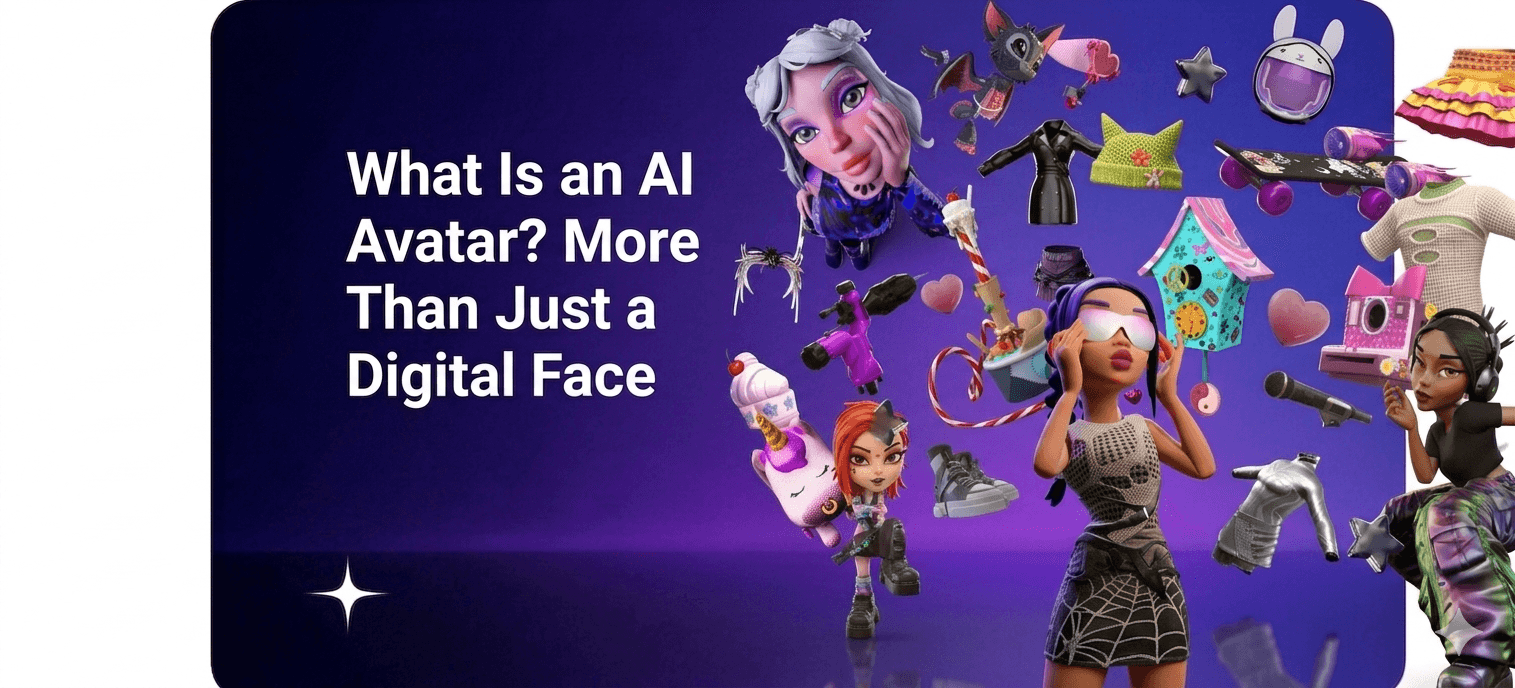
What Is an AI Avatar? More Than Just a Digital Face
The future of AI isn’t just a smarter chatbot. Intelligence is becoming common, but most AI still lacks a crucial element: a soul. So, what is an AI avatar? It’s the missing piece. It’s a fully-realized digital character built on four layers: its looks, its brain, its behavior, and its ability to play across the internet. This structure is the key to creating AI you can actually connect with, turning a string of code into a personality you can see and understand. It’s the difference between using a tool and talking to a character you can form a real relationship with.
Key Takeaways
An AI Character Is More Than a Chatbot: A real AI character is built from four layers working together: its looks, a brain that learns, behavior that shows emotion, and the freedom to exist across different apps and games.
It's About Connection, Not Just Content: AI characters let brands and creators move beyond one-way announcements by offering personalized, 24/7 interactions that build genuine loyalty with their audience.
Responsibility Is Part of the Build: Creating good AI characters means tackling the tough questions head-on, like getting consent for digital likenesses, being transparent with users, and protecting their data.
What's an AI Avatar?
Let's get one thing straight: an AI avatar is not just a profile picture that talks. It’s a digital character with a brain, designed to interact with you in a way that feels surprisingly human. This isn't about creating a simple chatbot and slapping a face on it. It's about giving AI an identity, a personality, and the ability to express itself, turning a simple tool into something you can actually connect with.
More Than a Pretty Face
An AI avatar is a digital representation of a person or character that uses artificial intelligence to speak, show emotion, and move in a natural way. Instead of just reading text in a chat window, you’re interacting with a character that has expressions and mannerisms. This makes the entire conversation feel more present and real. You can see this in action on platforms like Genies Chat, where you talk with AI characters who have their own unique personalities and reactions. They can answer questions, offer support, or just hang out, creating a much richer interaction than a faceless text box ever could.
AI Characters vs. Regular Avatars
So, what makes an AI character different from the avatar you use in a video game? A regular avatar is basically a digital puppet. You control its every move, from walking around to choosing what it says. It’s a visual stand-in for you, but it has no thoughts of its own. An AI character, on the other hand, combines a visual body with an AI brain. It can think, learn, and react independently. While regular avatars stay the same, AI characters can adapt based on their conversations with you, making each interaction unique. Think of it this way: a regular avatar is a costume you wear online, while an AI character is someone you meet there.
The Anatomy of an AI Character
What makes an AI character feel real isn’t just a smart brain. A truly believable AI character is built on four distinct layers that work together: its looks, its brain, its behavior, and its ability to play. When you just have a brain, you have a chatbot. But when you combine all four, you get something that feels alive. You get an identity.
This structure is the key to creating AI that you can actually connect with. It’s the difference between using a tool and talking to a character. Each layer builds on the last, turning a string of code into a personality you can see, understand, and interact with. Forget faceless text boxes. This is about giving AI a consistent face, a unique personality, and a presence that feels genuine across any platform. This approach moves AI from a simple utility to something people can form actual relationships with. As intelligence becomes more common, the real differentiator will be the identity and trust built through these complete, multi-layered characters. Let's break down what goes into making an AI character that actually feels like someone.
Looks: The Visuals
Looks are the first thing you notice. It’s the visual identity, the digital skin. But it’s much more than a static profile picture. A good AI character has a dynamic appearance that includes realistic facial expressions and body movements. This isn't about creating a perfect human replica, either. The best systems let you create anything you can imagine, whether it’s a stylized version of yourself, an animal, or something completely abstract.
The visual layer is the foundation for personality. It’s how an AI character shows emotion before it even says a word. At Genies, our avatar technology is built for this kind of radical customization and expression. The goal is to give every AI a unique and recognizable look that can be anything its creator wants it to be, ensuring the visuals are as flexible and dynamic as the intelligence behind them.
Brain: The Intelligence
The brain is the engine running the whole operation. This is where the AI processes information, learns, and formulates responses. Using technologies like Natural Language Processing (NLP), the brain can understand what you’re saying and generate a relevant reply. But a truly smart AI character does more than just answer questions. It learns from your conversations to better understand your personality, interests, and sense of humor.
Over time, the brain can start to anticipate what you want to talk about, making the interaction feel less like a Q&A and more like a real conversation. You can see this in action in Genies Chat, where different AI characters use their unique brains to talk about everything from sports to music with their own specific knowledge and point of view. It’s an intelligence designed for connection, not just information retrieval.
Behavior: How They Act
Behavior is what connects the brain to the looks. It’s how an AI character’s thoughts and feelings are translated into physical actions in real time. When the brain processes that a conversation is happy, sad, or funny, the behavior layer makes the avatar smile, frown, or laugh. This includes everything from subtle facial expressions and hand gestures to full-body animations that match the tone of the dialogue.
This is what makes an interaction feel authentic. Without behavior, you just have a puppet with a script. With it, you have a character that reacts to you with genuine-feeling emotion and body language. This ensures the character’s actions are always consistent with its personality, making it more believable and engaging. The character doesn't just say it's excited; it looks and acts excited.
Play: Where They Go
Play is about freedom. An AI character shouldn't be trapped in a single chat window or app. The play layer ensures that an AI character can exist across the internet, showing up in games, social media, and other digital spaces while maintaining its core identity. This is where the concept of a persistent digital identity becomes real. Your character, its look, and its brain can travel with you.
For developers, this is made possible by tools like the Genies Avatar SDK, which allows them to integrate these persistent, cross-platform characters into their own apps and games. For users, it means you can build a relationship with an AI character that recognizes you and your history together, no matter where you interact with it. It’s about making AI a part of your world, not just a destination you visit.
Types of AI Avatars You'll See
Not all AI avatars are created equal. The term gets thrown around a lot, but it covers a wide range of digital beings, from simple presenters to fully interactive characters. Think of it like this: some are just puppets reading a script, while others have a mind of their own. Understanding the different types helps you see where the technology is and where it’s going. Each one serves a different purpose, whether it's for a brand, a game, or a personal project. Here’s a breakdown of the main AI characters you’ll run into out in the wild.
Scripted Presenters
These are the most straightforward AI avatars. You give them a script, and they read it back with realistic lip-syncing and expressions. They’re basically digital actors who never forget their lines. You’ve probably seen them in corporate training videos, social media ads, or as website guides. They’re great for delivering information consistently and at scale, but they can’t go off-script. A scripted presenter is a one-way communication tool; they talk at you, not with you. While useful for certain tasks, they lack the dynamic interaction that makes an AI character feel truly alive.
Interactive Conversational Avatars
This is where things get more interesting. Interactive conversational avatars can listen and respond in real time. They use AI to understand what you’re saying and generate a relevant reply, complete with appropriate body language and tone. Instead of just reciting lines, they hold a conversation. You might find them working in customer service roles or as information guides that can answer your specific questions. This is the kind of technology you see in Genies Chat, where you can have a real back-and-forth with an AI character, making the interaction feel personal and engaging, not just transactional.
Digital Twins
A digital twin is an AI avatar designed to be a near-exact replica of a real person. The process involves using photos, videos, and voice recordings of an individual to create their AI counterpart. This AI can then say and do new things while retaining the person's likeness and voice. Public figures and celebrities sometimes use them to create scalable content or personalized messages for fans. The goal is to create a digital version of someone that is almost indistinguishable from the real thing. This type of AI character raises important questions about consent and what it means to own your likeness in a digital world.
IP and Brand Characters
These are AI avatars that bring a brand’s mascot or a beloved fictional character to life. Instead of just seeing them in a movie or on a cereal box, you can actually talk to them. This allows companies to build a much deeper, more personal connection with their audience. For example, Genies works with partners like the MLB Players Inc. and the National Basketball Players Association to turn famous athletes into interactive AI characters. Fans can then use Genies Chat to have unique conversations with their heroes, moving beyond the one-way relationship of traditional media and building a genuine emotional connection.
Game and Immersive Avatars
In virtual worlds like video games, AI avatars act as non-player characters (NPCs) that can think for themselves and react dynamically to what’s happening around them. Instead of following a simple, repetitive path, they can make decisions, interact with players in unscripted ways, and contribute to a more immersive world. For developers, creating these smart characters is a huge undertaking. That's why tools like the Genies Avatar SDK exist. They give builders the foundation to add intelligent, responsive AI characters to their games without having to build everything from scratch.
How AI Avatars Are Used
AI avatars aren't just for your social profile picture. They're showing up in practical ways across different industries, changing how companies communicate, teach, and sell. Instead of static text or generic stock photos, businesses are using AI characters to create more dynamic and personal interactions. From marketing to customer support, these avatars are being put to work. They can scale communication in a way that feels more human than a simple chatbot, but more efficient than a full-scale video production team. Here are a few of the most common places you'll find them.
Marketing and Brand Connection
Brands are using AI avatars to create product videos and ads without booking a studio or hiring actors. It’s a straightforward way to produce tons of content and test what messaging hits right with different audiences. But the real shift happens when brands move beyond one-way announcements. Instead of just talking at people, they can create AI characters that people actually want to talk to. This is where you can build a real brand connection. Platforms like Genies Chat let you have one-on-one conversations with characters from your favorite sports leagues, musicians, and brands, turning a passive audience into an engaged community.
Corporate Training and Onboarding
Let’s be honest, most corporate training is a drag. AI avatars are changing that by replacing boring presentations with clear, consistent video instruction. An AI character can act as a virtual tutor, walking new employees through complex processes or delivering company-wide updates. The best part? They deliver the exact same perfect training every time, can be updated instantly, and are always available. This makes onboarding more efficient and ensures everyone gets the same high-quality information, whether they’re at headquarters or working remotely. It’s a simple way to make internal education more engaging and a lot less painful.
Customer Support
We’ve all been stuck in a frustrating loop with a faceless chatbot. AI avatars offer a better alternative. By giving their support systems a face and a personality, companies can make automated help feel more human. An AI character can guide you through troubleshooting steps or answer frequently asked questions, acting as a friendly digital helper on a website or at a kiosk. This small change makes a big difference in the customer experience, turning a potentially negative interaction into a helpful and reassuring one. It’s about building trust, even when things go wrong.
Global Content Creation
Creating content for a worldwide audience is a huge logistical and financial challenge. AI avatars simplify the process. A single AI character can be programmed to speak dozens of languages, allowing a brand to connect with people in different countries without reshooting every video. This makes a global marketing strategy much more attainable. Instead of juggling multiple actors, studios, and translators, a company can use one consistent character to deliver a localized message. It ensures the brand’s voice and identity stay intact, no matter where in the world the content is viewed.
Why Use AI Characters?
Let's be honest, most of our interactions with AI are still with a faceless text box. While the intelligence is there, the identity is missing. Giving AI a face, a voice, and a personality isn't just a cosmetic upgrade; it’s a strategic move that solves some of the biggest challenges in digital communication. It’s about turning a functional tool into something people can actually connect with.
For brands, creators, and developers, AI characters open up a new playbook. They offer a way to produce content at an incredible scale without losing that consistent, on-brand feel. They can be available for your audience 24/7, offering support and interaction that never sleeps. They also make true personalization possible, tailoring conversations to each individual user. All of this can be done while cutting down on traditional production costs and, most importantly, building a stronger, more genuine bond with your audience. It’s a shift from one-way announcements to two-way relationships.
Scale and Consistency
Imagine trying to create a hundred different videos for a new product launch, each one tailored to a different country and language. The logistics alone are a nightmare. This is where AI characters change the game. You can produce content quickly and at a massive scale, ensuring your message always looks and sounds exactly how you want it to.
There are no off days, bad lighting, or voice changes. Every piece of content maintains the same quality and adheres perfectly to your brand’s visual identity. This level of consistency is nearly impossible to achieve with traditional methods, especially when you’re trying to move fast. AI characters give you the ability to be everywhere at once without ever sacrificing your standards.
Always On, Everywhere
Your audience is global, and they aren’t all on a 9-to-5 schedule. An AI character can be there for them anytime, anywhere. Whether it’s a customer needing help at 3 a.m. or a fan wanting to interact with their favorite IP, an AI character provides instant, round-the-clock support. This constant availability transforms how users interact with a brand or creator.
Instead of waiting for business hours, people get the answers and engagement they want right away. This builds a sense of reliability and shows your audience that you’re there for them. It’s a powerful way to provide personal support that meets people where they are, whenever they need it.
Personalization for Everyone
One-size-fits-all messaging doesn't cut it anymore. People expect interactions that feel personal and relevant to them. AI characters excel at this by adapting their conversations and even their appearance to fit different users. They can offer special, personal interactions that make each person feel seen and understood.
Think of an AI character from a sports league discussing a user’s favorite team, or a brand’s character recommending products based on past conversations. This goes far beyond just using a first name. It’s about creating a unique dialogue for every single user, which builds a much deeper and more meaningful connection over time.
Smarter Production Costs
High-quality video and interactive content used to mean big budgets, complex shoots, and a lot of moving parts. AI characters completely change that equation. You can create professional-grade content without ever booking a studio, hiring actors, or dealing with camera equipment. This dramatically cuts down on production costs.
This shift makes high-quality content creation more accessible for everyone, from solo creators to large enterprises. You can allocate your budget to other areas while still producing an endless stream of engaging material. It’s about working smarter, not just spending more, to get the results you want.
Building Real Connections
At the end of the day, people connect with people (or at least, things that feel like people). A faceless chatbot can answer a question, but it can’t build a relationship. Studies show that we pay more attention and build more trust when we see a human-like face delivering information. This is the real power of AI characters.
They turn sterile interactions into genuine conversations. When you can talk to your favorite characters and public figures in Genies Chat, you’re not just consuming content; you’re building an emotional connection. This leads to deeper engagement and long-term loyalty because the interaction feels less like a transaction and more like a real relationship.
Let's Be Real: The Limitations
AI characters are cool, but they’re not magic. Like any technology, they have their limits. Ignoring them is a fast track to creating something that feels clunky, creepy, or just plain wrong. So before you dive in, let's get real about the hurdles. The main challenges boil down to three things: making them feel authentic, getting the tech right, and making sure they represent people fairly. Understanding these limitations is the first step to overcoming them and building AI characters that people actually want to interact with.
The Question of Authenticity
Let's be honest, some AI avatars have the emotional range of a toaster. They can be great for round-the-clock support, answering basic questions without a coffee break. But when you need to tell a story with real emotional weight, a stiff, scripted avatar can kill the vibe completely. It’s the digital equivalent of a bad actor. This is why at Genies, we focus on personality. In Genies Chat, for instance, each character has a unique brain and behavior, so they react in ways that feel true to who they are, not just like they're reading a script.
Tech and Integration Hurdles
Making an AI character feel alive is a serious technical challenge. It’s not just about a pretty face. You have to perfectly sync up the visuals, the intelligence, the voice, and the behavior in real time. If any one of those layers is out of sync, the whole illusion falls apart. It’s like watching a movie with the audio delayed by half a second; it’s just off. That’s why a truly integrated system is so important. Getting all these parts to work together is the difference between a digital puppet and a living character.
Representation and Avoiding Bias
AI is made by humans, which means it can inherit our biases. If the data used to train an AI is skewed, the AI characters it creates will be too. This can lead to a digital world that reinforces stereotypes instead of breaking them. Then there’s the issue of digital likeness. The tech makes it possible to create fake videos or avatars of real people without their consent, which opens up a huge can of ethical worms. Building tools that encourage diversity and require clear consent isn't just good ethics; it's essential for creating a technology that serves everyone.
The Big Ethical Questions
As AI characters become more common, we have to talk about the ethics. This isn't just about building cool tech; it's about building it responsibly. The questions aren't always easy, but they're important to ask.
Consent and Digital Likeness
Let's start with a simple rule: you can't just make an AI character of someone without their permission. Creating an avatar that mirrors a real person requires their explicit consent and a commitment to carefully handle their personal data. It’s a bright red line. This is why you see official partnerships where public figures and brands choose to create their AI counterparts. It’s a collaboration, not a data grab. Respecting a person's digital identity is fundamental, and getting clear, informed consent is the only way to do it right.
Being Transparent with Users
No one likes being tricked. It’s crucial that you know when you’re talking to an AI. This isn’t about making the AI seem less impressive; it’s about honesty and managing expectations. When you open an app like Genies Chat, you know you’re there to interact with AI characters. This transparency builds trust and lets you engage with the technology on its own terms. The point isn't to perfectly imitate a human and pass it off as real. It's to create a new kind of interaction that's engaging and fun, with everyone in on the premise from the start.
Data Privacy
When you talk to an AI, it learns from you. So, where does that information go? This is a major question, and responsible companies take it seriously. They build their platforms with data protection as a core feature, not an afterthought. This means getting certified for security standards, having clear privacy policies, and employing teams to ensure user safety. Your conversations help make the AI better, but that data must be handled securely and ethically. You should always know how your information is being used, stored, and protected.
Preventing Misuse
Powerful tools can be used in harmful ways. The same tech that creates an AI character could be used to generate fake content of real people without their consent. To prevent this, platforms need to set firm guardrails. This means having a strong terms of service that explicitly forbids creating political, sexual, or discriminatory content. It also requires active content moderation and a commitment to enforcing the rules. The goal is to foster creativity and connection, and that can only happen in a safe and respectful environment.
How Genies Builds AI Characters
An AI character is more than just a pretty face, and a smart brain is useless if it’s stuck in a text box. For an AI to feel real, it needs an identity. That’s why we build our AI characters with four distinct layers that work together: Looks, Brain, Behavior, and Play. This is the core of our tech and our entire approach to giving AI a personality you can actually connect with.
First up is Looks. This is the visual identity. We built a system that lets a character be anything you can imagine, whether that’s a perfect reflection of you, an animal, or even a car. It’s about total creative freedom and establishing a recognizable presence.
Next is the Brain. This isn't just about answering questions. A great AI character should know you well enough to suggest things before you even think of them. It’s a proactive partner that learns from your interactions to become more attuned to your personality and needs.
Then there’s Behavior. This is where the brain meets the body. An AI character needs to act the part, reflecting emotions and intent through real-time animation. When you’re excited, they look excited. This visual feedback is what makes a conversation feel genuine instead of scripted.
Finally, there’s Play. An AI character shouldn’t be trapped on one platform. They should be able to travel with you across the internet, showing up in your favorite apps and games. This turns a static avatar into a dynamic part of your digital life. You can see how these layers come together by interacting with different personalities in Genies Chat.
Related Articles
Frequently Asked Questions
What's the real difference between an AI character and the avatar I use in a video game? Think of it this way: your game avatar is a puppet, and you’re pulling all the strings. It only moves or speaks when you make it. An AI character, on the other hand, has its own brain. It can think, react, and hold a conversation with you all on its own, making decisions based on its unique personality and your chat history.
So when I talk to an AI character, is it just learning to be a copy of me? Not at all. While a good AI character learns from your conversations to better understand your interests and humor, its goal isn't to mimic you. It uses what it learns to have more relevant and personal conversations with you, all while maintaining its own distinct personality. It’s more like a friend who remembers you like a certain band, not a parrot repeating your words back to you.
Is this the same thing as a deepfake? No, and it's an important distinction. Deepfakes are typically made to deceive, often using someone's likeness without their permission. Responsible AI character creation is built on consent and transparency. For example, when you talk to a character on a platform like Genies Chat, you know it's an AI, and the public figures involved have chosen to create their digital counterparts. It's about creating new, honest interactions, not fakes.
How does an AI character know how to act happy or sad, not just say it? It's all about connecting the brain to the body. The AI's brain analyzes the conversation's tone, and the behavior layer translates that feeling into real-time animation. So, the AI doesn't just type out "That's funny." It processes the humor and then triggers a laugh or a smile on the character model. This connection is what makes the interaction feel believable instead of robotic.
This sounds cool, but where can I actually try talking to one? You can go talk to a bunch of them right now. Platforms like Genies Chat are built for this. You can have conversations with different AI characters from sports, music, and culture. It’s the best way to see for yourself how a character with a real personality feels different from a simple text box.