What Is a Virtual Avatar? The Complete Guide
A profile picture can show your face. A virtual avatar can show up as you, move like you, and carry a recognizable point of view across digital spaces.
Chat with AI Characters at Genies Chat
What is a virtual avatar? It is a digital representation of a person, character, or brand that can be customized for social interaction, chat, gaming, and identity. Unlike a static image, an animated avatar can express emotion, respond to context, and become part of an ongoing digital identity.
The idea is not new. The word avatar entered digital culture through early online worlds, but modern AI and 3D tools make avatars more expressive, interactive, and useful across platforms. That shift raises a practical question: what separates a fun animated character from an intelligent identity that can actually travel with you?
Start with the definition, then look at the design choices that give a virtual avatar meaning beyond its pixels.
What Is a Virtual Avatar, Exactly?
A virtual avatar is a digital representation of a person or character in an online space. It can look like you, look nothing like you, or sit somewhere delightfully in between. The key difference is that it is more than a profile picture. A virtual avatar can be animated, customized, and interactive. It can move, react, communicate, and show up across different kinds of digital worlds.
The word itself has a long history. Avatar comes from the Sanskrit word avatarah, meaning "descent," and originally described the incarnation of a deity into the physical world. In the late twentieth century, the term moved into digital culture. Early online multiuser dungeons, or MUDs, used the concept as early as 1984 for representations of people in virtual environments. The name changed context, but the basic idea stayed remarkably consistent: a self, represented somewhere else.
Today, that "somewhere else" might be a game, a chat, a social platform, a virtual event, or a brand community. An avatar can represent one individual, a fictional character, or a larger creative identity. It might be the character you play, the face attached to your messages, or the visual language a company uses to meet its audience. Research describes avatars as digital representations used for social interaction, gaming, chat, and branding, often acting as an extension of the user in virtual spaces. That extension can give online interaction a stronger sense of identity and presence.
Customization is what makes the idea personal. You can choose an avatar's face, style, proportions, clothing, voice, expressions, and movement. Those choices are not just decoration. They signal mood, taste, humor, culture, and intent. A bright, animated character says something different from a polished professional mascot or a low-key digital version of yourself.
Animation adds another layer. A static image can identify you, but an animated avatar can respond. It can wave, dance, change expression, and participate in a conversation. That is why the next question matters: how much more can an avatar communicate when it is not frozen in one frame?
How Is a Virtual Avatar Different From a Static Profile Picture?
A static profile picture gives people one visual snapshot. It can show your face, a favorite character, or a carefully chosen 2D icon, but it stays the same until you replace the file. A virtual avatar is an animated digital identity. It can move, react, communicate, and change its presentation in real time.
That difference matters because identity is not a still image. It includes expression, timing, style, and response. A virtual avatar can carry those signals into a chat, game, social space, or live interaction. When its appearance and behavior reflect the person behind it, the result feels less like an account image and more like a recognizable presence.
Static profile pictures and animated virtual avatars compared
Capability | Static profile picture or 2D icon | Animated virtual avatar |
|---|---|---|
Animation | Fixed pose, expression, and composition. | Moves through gestures, facial expressions, poses, and other visual cues. |
Interactivity | Identifies an account but does not respond. | Reacts to conversation, input, surroundings, or events as they happen. |
Intelligence | Contains no built-in conversational behavior. | Can connect to AI systems that help it interpret input, respond, and express a consistent personality. |
Identity expression | Communicates identity through one selected image. | Expresses identity through appearance, motion, voice, style, and behavior. |
Real-time use | Works as a profile marker across a page or platform. | Can participate in live chat, gameplay, social interaction, and other changing environments. |
The distinction is not just technical. Research found that people viewed avatars reflecting their habitual facial expressions as more similar to themselves than avatars that did not. Participants also found avatars based on their facial appearance more familiar. Those findings suggest that motion and customization can make a digital identity feel more personally accurate, not merely more decorative. See the research on avatar appearance and expression for the full findings.
So, what is a virtual avatar? It is a digital identity built for presence, not just recognition. A profile picture says that this is my image. An animated avatar can show how I want to appear.
Where Virtual Avatars Show Up Today: Chat, Gaming, and Brand Identity
A virtual avatar can be more than a profile image. It can speak, react, move through a game world, or give a brand a recognizable point of view. That makes the same core idea useful in very different places: wherever people want a digital identity that feels expressive and easy to recognize.
Research describes avatars as digital representations used for social interaction, gaming, chat, and branding. They act as an extension of the person, character, or organization behind them. Customization matters here. A study on avatar identity found that avatars reflecting a user's appearance felt more familiar, while avatars reflecting habitual facial expressions felt more similar to the user. Another study links avatar customization with avatar identification, online social support, and user satisfaction. In plain English: when your avatar feels like yours, you are more likely to care what it does.
Chat and conversation: A conversational avatar can give a digital identity a voice, visual presence, and consistent personality. For example, a user might create a stylized character that greets friends, reacts to a joke, or carries the same look and tone across a social chat.
Gaming: In games, an avatar can be the playable character, a social identity, or a smart character that responds to what is happening around it. Picture a custom character moving from a multiplayer lobby into a user-generated world without needing a totally new look.
Brand identity and marketing: A brand avatar can turn a logo's personality into a character people can recognize and interact with. A music artist might use one for a virtual listening event, while a sports brand could create a mascot that appears in community content and game spaces.
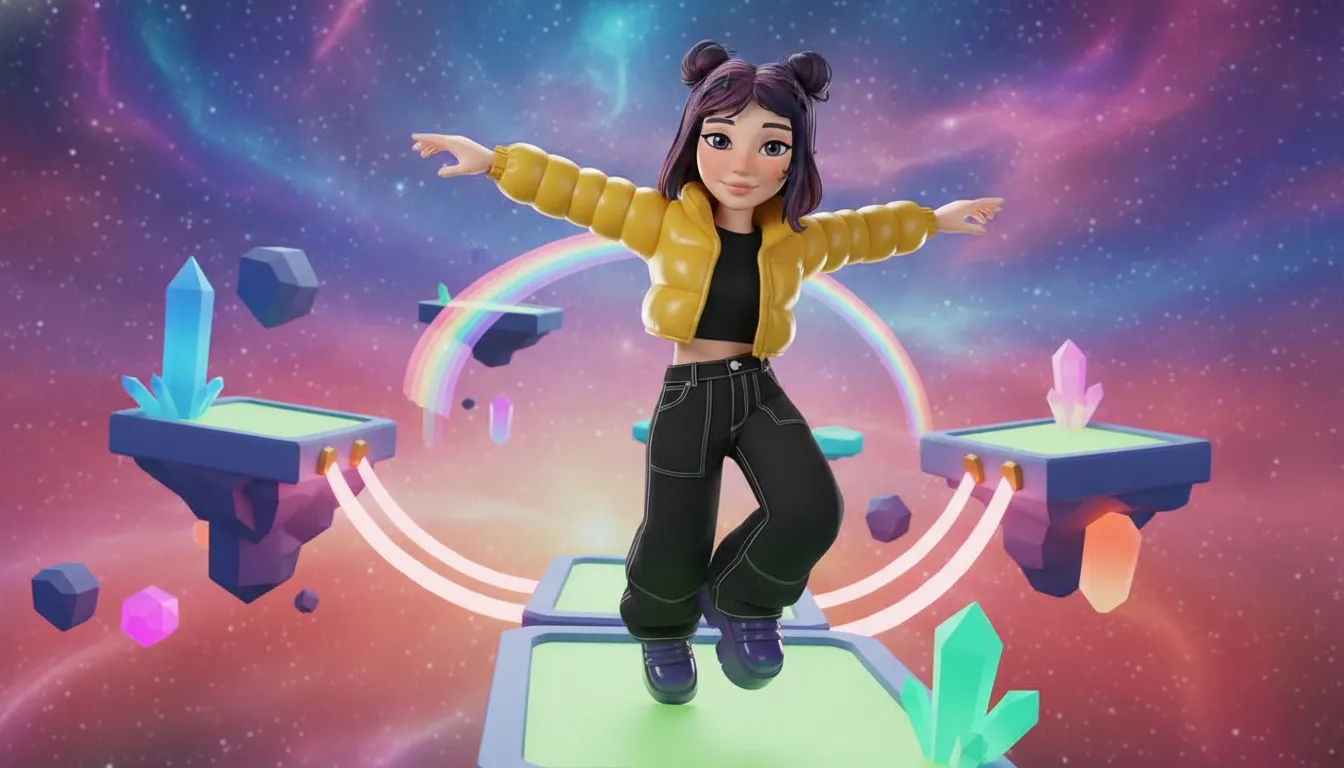
The interesting shift is that these use cases do not have to stay in separate lanes. An avatar created for chat can become a character in a game. A creator's character can become part of a brand collaboration. That only works when the identity can travel with its appearance, behavior, and assets.
Genies approaches this through True Interoperability: digital identities and assets are designed to work across platforms rather than getting trapped in one app. The Genies Avatar Framework lays out that ecosystem approach, connecting avatars, AI intelligence, 3D creation, and user-generated content. The result is a character that can keep its identity while the context changes. From a quick chat to a game world to a campaign built for a community.
Why an Intelligent Avatar Feels More Like You
A virtual avatar can become more than a character you control. With the right details, it can act as a visual shorthand for your personality: the look you choose. The expressions you make, and the style you bring into a conversation. That is why customization matters. It gives an avatar signals that feel personal rather than generic.
Research on virtual avatars found that participants judged an avatar as more similar to themselves when it reflected their habitual facial expressions. An avatar that captured a person's familiar reactions, not just their general appearance, felt closer to their identity. The study also found that avatars reflecting a participant's facial appearance felt more familiar than versions that did not.
Familiar details create recognition
People recognize themselves through patterns. A raised eyebrow, a particular smile, or the way someone reacts with a quick change in expression can communicate as much as a sentence. When an avatar carries those patterns, it gives the user a way to show up that feels recognizable, even when the setting is digital.
This does not mean an avatar must be a perfect copy. A different hairstyle, color palette, outfit, or set of accessories can represent how someone wants to be seen. The point is agency. You decide which parts of your identity to make visible, which to exaggerate, and which to leave behind. That makes the avatar a flexible extension of you, rather than a preset character with someone else's assumptions built in.
Customization can support connection
The effect reaches beyond appearance. A recent study titled Avatar Customization Predicts Subsequent Online Social Support and User Satisfaction via Avatar Identification links customization with avatar identification, online social support, and user satisfaction. The finding suggests that investing in a digital representation can influence how people relate to themselves and others through it. Read the research on avatar identification.
Genies gives that identity-building process room to develop. You can create your digital identity through an animated avatar that reflects your taste, mood, and way of communicating. The result is not just a profile image. It is a character with room for expression, built from choices that feel like yours.
How AI Makes Virtual Avatars Feel Alive
A scripted avatar can play an animation when someone taps a button. An intelligent avatar can respond to context, remember what matters, and maintain a recognizable point of view. That difference is the line between a character that performs and one that feels present.
Large language models give an avatar a flexible intelligence layer. In Genies Smart Avatars, that layer supports persistent personality, memory, and behavioral intelligence. Personality shapes how the avatar speaks and reacts. Memory gives conversations continuity instead of treating every interaction like a first meeting. Behavioral intelligence helps the avatar choose an appropriate response rather than repeating a fixed line.
That does not mean the avatar needs to sound like a robot with a thesaurus. The best systems translate intelligence into a distinct voice: playful, dry, curious, dramatic, or calm. The personality should remain consistent while the response changes with the situation. A scripted puppet has dialogue. An intelligent avatar has a pattern of behavior.
Movement carries meaning too
Words are only part of communication. A pause, glance, change in posture, facial reaction, or small gesture can signal attention, surprise, uncertainty, or amusement. Research on virtual characters has focused on realistic expressions and non-verbal communication because these cues make interactions feel more customized and immersive: the research literature on virtual character expression examines this role.
For an avatar, animation is not decoration layered on top of intelligence. It is another channel for expressing intent. A good response can land differently when the character smiles, looks away, leans in, or lets a beat pass before speaking. The visual performance should support the meaning of the words, not compete with them.
Intelligence needs a world to inhabit
LLMs and expressive animation work best when they are connected to a broader creation system. Genies' Genies Avatar Framework brings AI intelligence, 3D graphics, interoperability, and user-generated content tools into one foundation. That makes the avatar more than a chat interface or a pre-rendered character. It can carry identity, behavior, and visual expression into the places where people create and connect.
In short, AI makes a virtual avatar feel alive when memory, personality, language, and non-verbal expression reinforce one another. The result is not a character following a cue sheet. It is a digital identity that can participate.
What to Look for When You Build Your Own Virtual Avatar
A good avatar platform should give you more than a polished character creator. It should help you make a digital identity that can move, communicate, and keep its sense of self wherever you take it. Avatars are used for social interaction, gaming, chat, and branding, so the right platform needs to support the full range, not just one cute profile image.
Use this checklist before you commit to a tool:
Check that the avatar is genuinely animatable. A flat image can look great in a feed, but it cannot react in a conversation or perform in a game. Look for facial movement, body motion, gestures, and real-time responsiveness. The goal is a character with physical presence, not a PNG wearing a new outfit.
Look for intelligence with personality and memory. If your avatar can chat, it should do more than retrieve generic replies. Check whether you can define its personality, tone, interests, and boundaries. Persistent memory matters too. Without it, every interaction starts from zero and the character feels less like an identity and more like a rotating prompt.
Ask where the avatar can go. Interoperability means your creation is not trapped inside one app. Genies True Interoperability is designed around avatars that can work across platforms, giving the character a wider life in social spaces, games, and other digital environments. Review the platform's actual export and integration options before assuming a marketing claim means portability.
Choose a creation process you will actually use. A powerful tool that requires specialist 3D skills can turn a fun idea into homework. Look for intuitive customization, reusable assets, and a clear path from first draft to finished avatar. If you are starting from zero, this guide can help you create an AI avatar without losing the creative part of the process.
Prioritize expression, not just appearance. Research on virtual characters has focused on realistic expressions and non-verbal communication because movement carries meaning. Facial cues, posture, timing, and gestures can make a character feel recognizable in ways that a static face cannot. Test the avatar in motion, not only in the editor.
Make safety part of the feature list. Look for clear controls over identity, moderation, data, permissions, and how the avatar can interact with others. You should know who can use the character, what it can say or do, and how to change those settings. Creativity is more fun when the boundaries are yours to set.
The best choice balances creative control with a reliable technical foundation. Start with the character you want to make, then check whether the platform can support its personality, movement, connections, and safety as that idea grows.
Why Genies Is Built for the Next Generation of Virtual Avatars
A virtual avatar should do more than look good in a profile frame. It should move, respond, remember context, and travel with its owner across the places where digital life happens. That is the lane Genies is building in: animated, intelligent identities with the creative range of a character and the technical foundation of a platform.
Genies Smart Avatars use large language models to support persistent personality, memory, and behavioral intelligence. In practical terms, that means an avatar can feel consistent instead of acting like a new character every time the conversation window opens. Its personality is not just a preset label. It can shape how the avatar responds and presents itself over time.
The visual side matters just as much. Genies AutoRigging converts 3D models into game-ready assets instantly, reducing the technical friction between an idea and a character that can actually move. Creators can focus on the look, attitude, and details that make an avatar recognizable, while the underlying rigging work gets handled at platform level. Fewer technical speed bumps. More room for personality.
Genies also treats identity as portable. Its True Interoperability approach is designed so digital identities and assets can work across platforms rather than staying trapped in one app or one isolated format. That matters for creators, developers, brands, and anyone who would rather not rebuild the same identity every time they enter a new digital space.
The foundation tying these pieces together is the Genies Avatar Framework. It brings AI intelligence, 3D graphics, interoperability, and user-generated content tools into one unified system. The result is an ecosystem where a character can be expressive on screen, responsive in conversation. And useful in games or social spaces without requiring four unrelated tools and a minor miracle.
For people starting with identity, Genies offers a practical path to create your digital identity. For developers and teams building at a larger scale, avatar developer kits show how the broader ecosystem is taking shape. The point is not to make avatars decorative. It is to give them enough intelligence, motion, and portability to become a real layer of digital identity.
Start building your own intelligent virtual avatar in Genies Chat.
Frequently Asked Questions
Are virtual avatars just profile pictures?
No. A profile picture is a still image, while a virtual avatar can be a customizable 2D or 3D identity that moves, speaks, reacts, and appears across digital spaces. Some avatars are controlled by a person, while others respond to software or AI. The key difference is that an avatar can represent you during an interaction, not just identify your account.
How are virtual avatars used?
They are used in games as playable characters, in chat as expressive digital identities, and in social spaces as a way to communicate without using a camera. Brands can also use them for interactive storytelling, branded characters, and customer-facing content. A strong avatar system keeps the identity consistent while allowing its appearance, behavior, and setting to change.
What makes an AI-powered avatar different?
An AI-powered avatar can interpret input and generate a response instead of following only a fixed animation or script. Its personality, memory, voice, facial movement, and gestures can work together during a conversation. Research on virtual characters has focused on realistic expressions and non-verbal communication because movement and reaction often carry meaning beyond the words being said: research on virtual characters.
How do you create your own virtual avatar?
Start with the identity you want to express, then choose its visual style, customize the character, and decide how it should move or communicate. If you plan to use it in more than one place, check whether the avatar and its assets can travel across platforms. Tools such as Genies Chat let you begin with an animated identity without needing to model and rig every detail yourself.