
AI persona vs AI agent: A Technical Guide
AI persona vs AI agent: A Technical Guide
The AI persona vs AI agent decision shapes more than the interface. An AI can complete every task on its list and still feel completely wrong for the product. That is because capability is only half the design problem. Developers, product leaders, and brands also need to decide what the AI represents, how it behaves, and whether users should recognize it as a consistent character.
Explore Genies Chat to see interactive AI personas in action.
AI persona vs AI agent: An AI persona defines who an AI is through identity, voice, behavior, memory, and embodiment. An AI agent defines what an AI can do through goals, planning, tools, and autonomous actions. A product can use either model alone or combine both in an agentic persona.
The distinction affects far more than interface copy. It changes system architecture, data policies, testing, risk controls, and the metrics a product team should track. A workflow agent might be judged by task completion and error rate. A persona might be judged by character consistency, appropriate reactions, and repeat engagement. A hybrid needs both sets of standards.
What is the difference between an AI persona and an AI agent?
An AI persona is organized around a persistent identity, while an AI agent is organized around achieving an objective. The simplest distinction is who the system is versus what the system does.
A persona shapes the way an AI speaks, remembers, appears, and reacts. It can include a backstory, traits, preferences, visual design, voice, gestures, and rules that keep the character recognizable over time. Genies brings this identity-led direction to life through interactive AI personas in Genies Chat.
An agent starts from a goal. It interprets a request, breaks the goal into steps, selects tools, performs actions, observes results, and adjusts its plan. It may be entirely invisible to the user. A scheduling agent, for example, can read calendars and suggest a meeting time without needing a distinct personality or animated form.
Neither category is automatically more intelligent. A detailed persona may have limited authority to act. A highly autonomous agent may have no persistent identity. The right classification depends on the system's organizing principle and the product outcome it is designed to create.
Dimension | AI persona | AI agent |
|---|---|---|
Primary purpose | Express a consistent identity | Achieve a defined goal |
Core loop | Interpret, respond, express | Plan, act, observe, revise |
Embodiment | Often important | Usually optional |
Autonomy | Can be low or high | Usually central |
Memory focus | Identity and relationship continuity | Task state and operational context |
Main risk | Character drift or inappropriate expression | Incorrect or unauthorized action |
Success measure | Consistency, engagement, recognition | Completion, accuracy, efficiency |
Identity, embodiment, autonomy, and behavior
Four design dimensions separate personas from agents in practice: identity, embodiment, autonomy, and behavior. Treating them as independent controls helps teams build the right system rather than forcing a false either-or choice.
Identity defines the character contract
Identity is the stable model of who the AI represents. It includes tone, knowledge boundaries, values, backstory, visual style, and acceptable ways of responding. For a brand or licensed character, this contract also protects the details users already recognize. A useful identity specification states not only how the character should speak, but what it should never claim, imitate, or endorse.
Identity must persist across channels. If a character is playful in chat but generic inside a game, users notice the break. Persistent identity is one reason the Genies Smart Avatars model combines looks, intelligence, behavior, and play rather than treating appearance as a decorative layer.
Embodiment turns output into performance
Embodiment gives an AI a visible, audible, or spatial form. A 3D character can coordinate speech with facial expression, gesture, posture, and movement. Those signals carry meaning that text cannot. A pause, raised eyebrow, or change in stance can alter how the same sentence lands.
Good embodiment requires more than connecting an LLM to an avatar. The response pipeline must translate conversational intent and emotional state into timed animation and voice cues. Rendering, animation blending, latency, and device performance become part of the AI product. The Genies overview of AI avatars beyond appearance explains why visual form works best when connected to intelligence and behavior.
Autonomy determines permission to act
Autonomy describes how far a system can proceed without human approval. Low-autonomy systems recommend a next step. Higher-autonomy agents execute multi-step workflows and recover from failures. The key question is not whether autonomy exists, but which actions are allowed, under which conditions, and with what approval gates.
Behavior connects identity to context
Behavior is the policy that converts state into a response or action. For a persona, behavior decides how character traits appear in a particular moment. For an agent, behavior decides which tool or plan to use. In a hybrid, behavior must keep the character consistent without letting style interfere with accurate task execution.
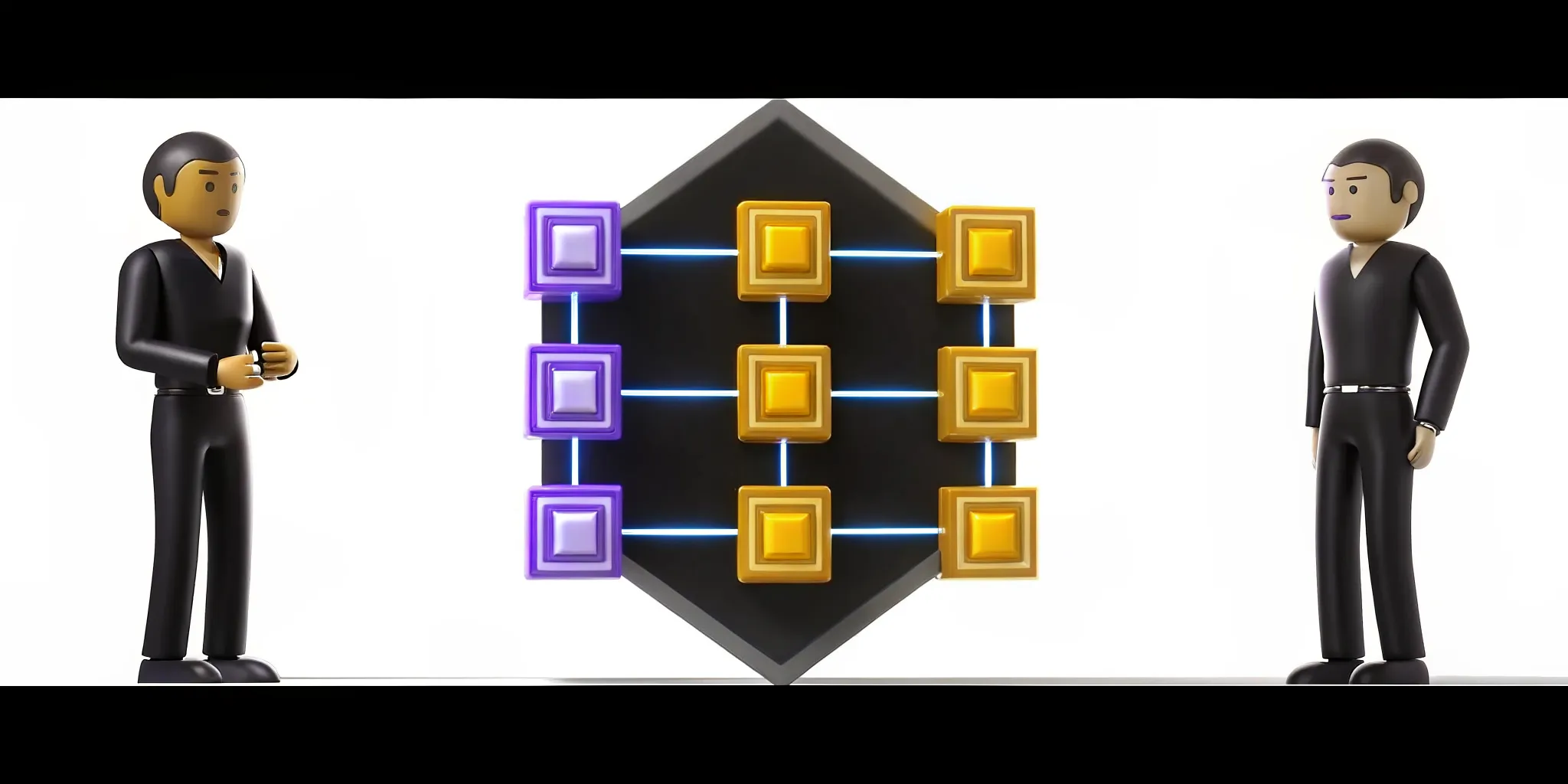
Architecture choices for persona, agent, and hybrid systems
A persona-centric stack prioritizes identity and expression, while an agent-centric stack prioritizes planning and tools. A hybrid architecture keeps those responsibilities separate, then coordinates them through explicit policies.
A persona-centric architecture
A practical persona stack includes an identity profile, conversation model, character memory, safety policy, and expression layer. Input flows into a context builder that selects relevant identity facts and prior interactions. The model produces a response plus structured intent, mood, or gesture signals. The expression layer then coordinates voice and animation.
Embodied systems add asset, rigging, rendering, and runtime requirements. The Genies technology stack focuses on bringing AI to life through visual identity and behavior. Its Avatar Framework also supports interoperable, game-ready characters and assets, a useful reference for teams thinking beyond a single chat surface.
An agent-centric architecture
An agent stack usually includes a goal interpreter, planner, tool registry, execution environment, task-state memory, and evaluator. The model selects an action, calls an approved tool, observes the result, and repeats until it reaches a stopping condition. Reliable agents also need timeouts, retry limits, budget controls, and clear escalation paths.
Tool boundaries matter more than model personality. Each tool should expose the minimum capability required, validate inputs, and return structured results. High-risk tools should require confirmation. A useful overview of the shift from response generation to autonomous action appears in Genies' discussion of the rise of AI agents.
A hybrid architecture
A hybrid should not collapse persona and agent instructions into one oversized prompt. Keep the identity layer, task planner, tool permissions, memory stores, and expression system modular. An orchestration layer can route a user request, determine whether action is needed, request approval when required, and pass the final result through the persona layer for an on-character response.
This separation makes the system easier to test. Teams can measure tool accuracy without animation noise, verify character consistency without granting action permissions, and replace individual components without rebuilding the whole product.
Explore Genies technology for building embodied, interactive AI characters.
Memory, orchestration, and context management
Memory gives a persona continuity and gives an agent operational context, but those are different jobs. Orchestration decides which memories, models, tools, and expression systems are allowed to participate in each interaction.
Separate character memory from task memory
Character memory stores durable facts that support continuity, such as established preferences, approved backstory details, and prior relationship context. Task memory stores temporary plans, tool outputs, and workflow status. Mixing them creates risk. A failed tool call should not become part of the character's identity, and a casual conversation detail should not automatically change an operational workflow.
Use memory tiers with clear retention rules. Session context can expire quickly. Approved long-term facts can persist. Sensitive information should have stricter access and deletion controls. Retrieval should be selective so the model receives only context relevant to the current request.
Use orchestration to protect boundaries
Orchestration is the control plane. It routes requests, retrieves context, chooses a model, authorizes tools, invokes safety checks, and records outcomes. For an embodied persona, it also sends structured cues to voice and animation systems. Genies' Party technology stack overview shows how identity, avatars, inventory, and multiplayer systems can operate as connected building blocks.
Good orchestration is observable. Product teams should be able to reconstruct why a response was generated, why a tool was called, what memory was retrieved, and which policy allowed the action. Without that trace, debugging turns into guesswork.
Can an AI persona also be an AI agent?
Yes. An agentic persona combines a recognizable identity and embodied behavior with the ability to plan and act. The combination is useful when users need both character continuity and meaningful task completion.
Consider a game character that remembers a player's choices, reacts in character, and dynamically plans its next move. Its identity and performance make it a persona. Its ability to observe game state, select actions, and pursue goals makes it an agent. A brand character could likewise guide product discovery while using approved tools to retrieve accurate catalog information.
The hybrid model creates a stronger interface, but it also multiplies failure modes. The system can take the wrong action, express the right action in the wrong way, or allow persona instructions to conflict with operational policy. Teams should define which layer wins when instructions disagree. Safety and factual accuracy should always override character style.
A practical hybrid request flow
Interpret intent: Determine whether the user wants conversation, information, or an action.
Load identity: Retrieve only the character traits and relevant history needed for this interaction.
Assess risk: Classify the requested action and identify any required confirmation.
Plan and act: Give the agent only approved tools, budgets, and stopping conditions.
Verify the result: Check tool output and policy compliance before presenting it.
Express in character: Render the verified result through appropriate language, voice, and animation.
The visual layer must also be ready for runtime demands. Genies' work with Unity highlights game-ready AI avatars and creation tools, including identity persistence, customization, memory, and behavioral AI.
Safety and governance by design
Persona safety focuses on representation and interaction, while agent safety focuses on authority and action. Hybrid products need both policy sets, with logs and human controls that make decisions reviewable.
Govern the identity layer
Persona governance should define approved character knowledge, tone, claims, relationships, and visual behaviors. Licensed IP and brand characters need review processes for updates. Teams should test adversarial prompts that attempt to pull the persona outside its role, generate harmful expression, or misrepresent the identity.
Embodiment creates additional safety signals. A text response can be acceptable while its animation or vocal delivery is not. Review systems should evaluate the complete rendered interaction, not just the transcript.
Govern the action layer
Agent governance starts with least privilege. Give every agent the smallest set of tools and data needed for its job. Separate read and write access. Require explicit approval for purchases, publishing, account changes, and other consequential actions. Set spending limits, action limits, time limits, and automatic stop conditions.
Audit logs should capture user intent, plans, tool calls, results, approvals, and final output. Evaluation suites should cover both normal operation and failure recovery. When uncertainty or risk crosses a threshold, the agent should pause and hand control to a person.
For technical leaders, this is an architecture decision rather than a final compliance check. Guardrails work best when built into tool interfaces, memory access, and orchestration from the beginning.
Try Genies Chat and see how expressive AI characters respond in real time.
How should you choose the right model?
Choose a persona when identity and expression drive value, an agent when autonomous task completion drives value, and a hybrid when users need both. Start with the product outcome, then add only the autonomy and embodiment that support it.
Best-fit use cases
Personas fit interactive storytelling, social products, branded characters, learning characters, and games where users should recognize the same identity over time. Agents fit research, scheduling, workflow automation, data operations, and support tasks with measurable completion criteria. Hybrids fit interactive NPCs, character-led commerce, and branded product guides that need both personality and controlled tool access.
For game and cross-platform use cases, teams also need to consider asset compatibility and runtime portability. The Genies Avatar Framework outlines an approach to adaptable avatars, assets, customization, and interoperability.
A decision checklist
Define the outcome: Write one measurable sentence describing what success looks like for the user.
Identify identity needs: Decide whether a recognizable character, brand voice, or persistent role affects that outcome.
Map required actions: List every tool, permission, external system, and approval the AI needs.
Set autonomy limits: Specify which actions are suggested, confirmed, or executed automatically.
Design memory boundaries: Separate identity continuity, user preferences, and temporary task state.
Plan evaluation: Test task accuracy, character consistency, latency, safety, and recovery independently.
A common mistake is adding a persona to make a weak workflow feel friendlier, or adding agent tools to a character before the product needs them. Both increase complexity. Build the smallest architecture that creates the intended user value, then expand based on observed behavior.
The AI persona vs AI agent decision is ultimately about interface and authority. A persona gives people a consistent identity to interact with. An agent gives software permission to pursue a result. Combine them carefully, and the result can act with purpose while remaining recognizable in every interaction.
Explore Genies Chat now to meet AI personas built for expressive, real-time interaction.
Frequently asked questions
These quick answers clarify the most common product and technical questions about personas, agents, and hybrid systems.
Is an AI persona the same as a chatbot?
No. A chatbot describes a conversational interface. An AI persona describes a persistent identity that may appear through chat, voice, animation, games, or other interfaces.
Does an AI agent need an avatar?
No. An agent can operate as an invisible service. An avatar is useful when visual identity, social interaction, or embodied feedback improves the product.
What is an agentic persona?
An agentic persona is a consistent AI character that can also plan, use approved tools, and act toward goals. It combines identity and embodiment with controlled autonomy.
Which memory should an AI persona vs AI agent use?
A persona needs governed identity and interaction memory. An agent needs task state and tool context. Hybrid systems should keep those memory types separate and retrieve only what each request requires.