
Smart NPCs Are Changing Game Development
Players can smell a cardboard NPC from a mile away. The shopkeeper who repeats one line. The quest giver who forgets the town nearly burned down five minutes ago. Smart NPCs change that equation by giving game characters a sense of context, personality, and presence that can keep up with the player instead of waiting for the next dialogue branch.
Explore the Genies developer platform to see how game-ready avatars and AI behavior can fit into a Unity project.
For developers, the opportunity is not to hand the whole game over to a chatbot. It is to make the moments between missions, menus, and big set pieces feel less pre-recorded. A character can recognize what happened earlier, stay true to a role, react with expression, and still operate inside rules the game team controls. That is the useful version of the future. The player gets a world with more life. The studio keeps authorship.
What are smart NPCs in video games?
Smart NPCs are non-player characters that combine a defined role, game-state context, memory, and responsive behavior. Instead of only selecting from a fixed dialogue tree, they can react to player input within boundaries set by the developer. The result is a character that feels more aware of the moment, not magically all-knowing.
A traditional NPC is usually built around authored states: idle, patrol, flee, trade, deliver quest, repeat. That structure remains valuable. It is predictable, debuggable, and good at protecting a game's pacing. Smart NPCs add a responsive layer around it. They can choose language, expression, or an appropriate reaction based on what the player has done and what the character is supposed to know.
Identity: who the character is, including motives, voice, relationships, and limits.
Context: where the character is, what is happening in the world, and what the current scene requires.
Memory: the player choices or prior moments worth carrying forward.
Behavior: the animation, action, and dialogue the character can use in response.
Guardrails: the rules that keep the NPC on-brand, in-world, and inside the game design.
That last piece is not glamorous, but it is the whole game. A smart NPC should not invent lore, derail a mission, or turn a tense scene into stand-up. The best implementation makes the character feel spontaneous while the design still has a hand on the wheel.
Why smart NPCs matter for player engagement
Smart NPCs matter because players notice when a world responds to them. A character that remembers a decision, changes its tone after a setback, or acknowledges the immediate situation can make a familiar loop feel personal. The gain is not endless conversation. It is better timing, better texture, and fewer dead moments.
Think about the difference between a guard who says, "Move along," forever and a guard who gets more suspicious after the player has caused trouble nearby. The second character does not need a novel's worth of dialogue. It needs a clear relationship to the world state and an expression that matches the beat.
For teams, this can create value in places that are often expensive to fill by hand:
Hub spaces that need repeat visits to feel fresh.
Side characters that should react to progress without requiring a new cinematic.
Social gameplay where players compare the consequences of their choices.
Live games that need room for new narrative moments over time.
The bar is not "make every background character a philosopher." That is a fast route to a noisy world and a very tired narrative team. The bar is giving the right characters a reason to react when the player gives them something meaningful to react to.
How do smart NPCs change game development?
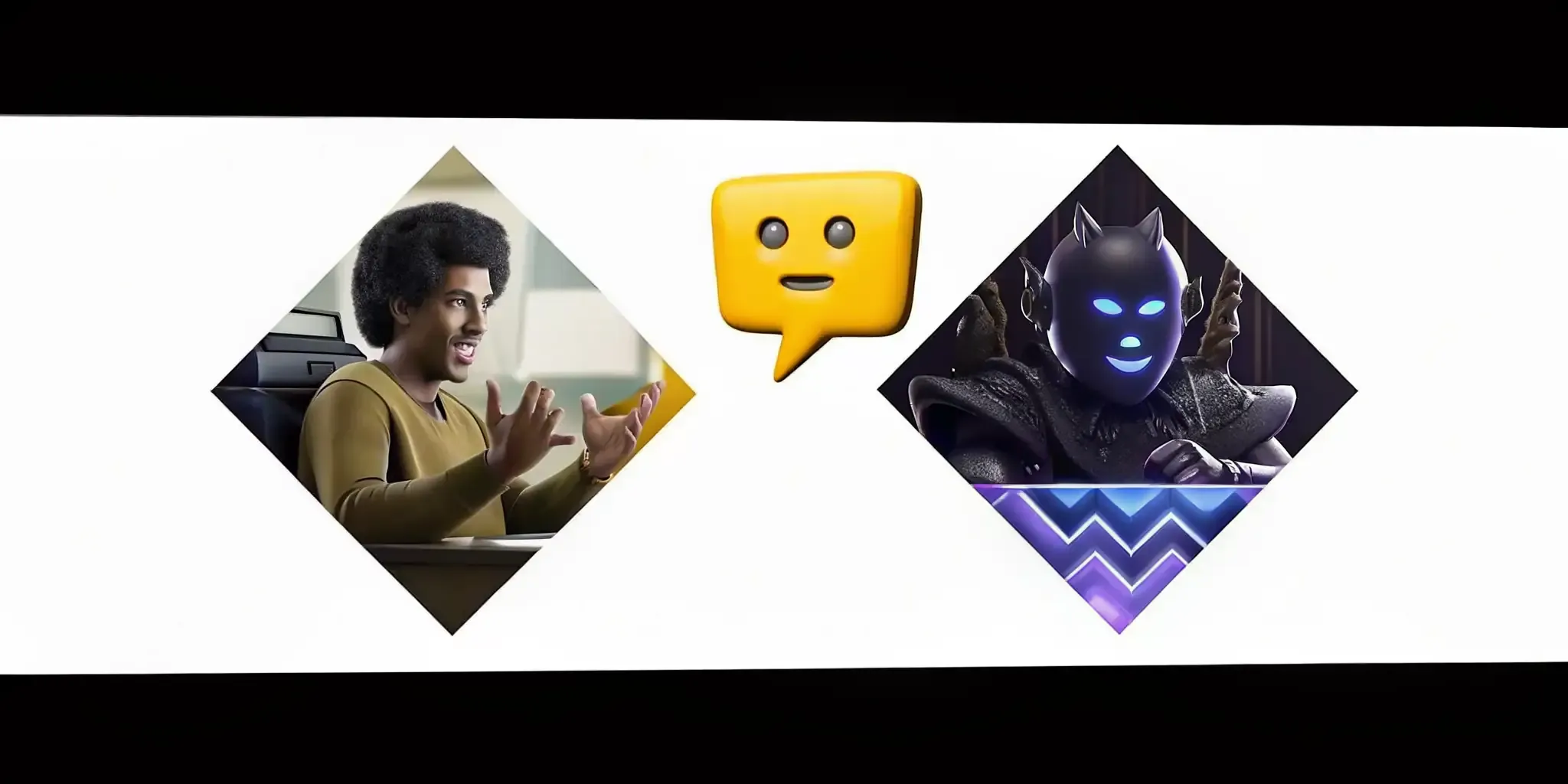
Smart NPCs shift some character work from writing every possible line to designing reusable character systems. Teams still author the world, the stakes, and the narrative boundaries. They add rules for what each NPC knows, remembers, and can do, then let responsive behavior handle more of the moment-to-moment variation.
That changes the production conversation. The question is no longer only, "What does this character say at node 14?" It becomes, "What should this character understand, remember, and never break?" Writers, designers, animators, and engineers all have a stake in that answer.
Build a character bible that can run
Before an NPC can react well, it needs a usable definition. Give it a role, a point of view, a social position, and a short list of priorities. Define its knowledge boundary, too. A bartender might know local rumors and notice the player's reputation. They should not know the hidden identity of a villain because the player asked politely.
This is where a visual character system earns its place. A character's look, posture, facial reactions, and behavior should point in the same direction. If the dialogue feels guarded but the avatar looks permanently delighted, the illusion is gone. For a look at that relationship, see why voice, face, and movement matter for expressive AI avatars.
Keep authored systems in charge
Use deterministic game logic for critical outcomes: combat, rewards, quest completion, progression, safety, and economy. Responsive dialogue and performance can sit around those systems. An NPC can make a conversation feel natural without being allowed to rewrite the quest log.
That division is practical. It helps teams test behavior, manage cost, and preserve the moments that need exact pacing. It also lets an indie team start small, perhaps with a single guide character, rather than rebuilding an entire population on day one. Sensible. Rare. Good.
What makes a smart NPC feel like a character, not a feature?
A smart NPC feels like a character when its words, memory, expression, and actions agree with each other. Players do not need an NPC to remember every sentence. They need it to remember the things a real character would care about, then react in a way that fits its identity and the scene.
Start with selective memory. Store durable facts that should shape future interaction: a player chose a faction, helped the character, betrayed their trust, or completed a meaningful milestone. Do not store every small exchange just because it is technically possible. Memory without judgment is clutter wearing a nametag.
Use scene memory for immediate context, such as a recent fight or a current mission.
Use relationship memory for choices that change trust, tone, or access.
Use world memory for major events that the character plausibly knows.
Use an expiration rule for details that should fade instead of following the player forever.
Then make the response visible. A pause, a shift in posture, a glance away, or a more guarded voice can tell the player that the NPC registered the moment. This is why a language layer alone is not enough. The visual and behavioral layer carries the feeling.

Want to build characters with a stronger visual foundation? See how game-ready 3D characters move from model to playable personality.
A practical path to building smart NPCs in Unity
Building smart NPCs in Unity starts with a small, controlled use case. Pick one character, one setting, and a few clear player intents. Define what success looks like before adding more behavior. A reliable NPC in a focused scene is more valuable than a broad demo that cannot survive a real playtest.
Choose the role. A guide, shopkeeper, rival, or quest contact has a defined reason to speak and react.
Write the boundaries. Document what the character knows, what it can offer, which topics are off-limits, and when it must hand back to scripted logic.
Map player signals. Decide which quests, inventory states, player choices, and relationship events should affect the character.
Connect personality to performance. Match dialogue style to animation, facial expression, voice, and idle behavior.
Test the awkward paths. Players will ask odd questions, repeat themselves, and try to break the scene. Let them. That is the point of testing.
Genies approaches this through separate layers that developers can combine. The Genies Avatar SDK is the character customization layer for Unity, including high-fidelity game-ready avatars, a modular in-game editor, clothing systems, and cross-game avatar and item interoperability. The Smart Avatar SDK is the AI behavior layer for characters and NPCs, adding personality, memory, and real-time expression. They are related products, but not the same thing.
If you are starting a Unity build, the Genies Avatar SDK sample scenes are a useful way to get a character foundation on screen before you start designing deeper NPC behavior. That order matters. Give the character a body, a role, and a world. Then make it smarter.
Where Genies Chat fits, and where it does not
Genies Chat is a consumer product where people interact with animated AI characters that maintain tone, expression, behavior, and personality in real time. It is a useful reference for why embodied interaction feels different from exchanging messages with a text box. It is not the Unity SDK, and developers should not treat it as one.
For game teams, the developer path is the SDK stack. The Avatar SDK handles the visual and customization foundation. Art Forge SDK supports 3D wearables and future props and styles. Smart Avatar SDK focuses on AI behavior for characters and NPCs. Each layer has a job. Keeping those jobs distinct helps a team choose the right starting point.
There is a larger design lesson here: players respond to characters, not just answers. When a character can react with a recognizable face, mannerism, and point of view, interaction has more weight. That is the visual layer for AI doing its job.
Are smart NPCs actually sentient?
No. Smart NPCs are designed systems that generate behavior or dialogue within their inputs, rules, and available context. They can simulate a convincing interaction, but that does not make them conscious. Good game design does not need the confusion, and players deserve a clear line.
The more useful question is whether the character is coherent. Does it keep its role? Does it respond to appropriate signals? Does it fail gracefully when a request is outside its scope? A well-designed NPC can feel memorable without pretending to be more than it is.
Smart NPC design checklist for game teams
A smart NPC rollout should be judged by how well it supports the game, not by how many open-ended replies it can produce. Start with a repeatable checklist that keeps narrative, gameplay, and performance aligned. The character should earn its complexity.
Give the NPC a clear gameplay or narrative purpose.
Set an explicit knowledge boundary and escalation path.
Choose only the player memories worth preserving.
Link emotional reactions to visual performance.
Protect critical gameplay outcomes with authored logic.
Test for irrelevant, repetitive, and out-of-character replies.
Measure whether the NPC makes the player stay, return, or care more.
Smart NPCs are not a shortcut around craft. They are another medium for it. The teams that get this right will not simply add more dialogue. They will build characters that have a reason to be in the room.
Ready to explore game-ready AI personas for your Unity project? Learn about the Genies SDKs and build the character layer your world has been missing.
Frequently asked questions about smart NPCs
Can smart NPCs remember player interactions?
Yes, when developers intentionally store selected information such as major player choices, relationship changes, or important world events. The best systems use memory selectively so each NPC remembers what fits its role, rather than collecting every detail from every conversation.
Do smart NPCs replace writers and narrative designers?
No. Writers and narrative designers define the character, world rules, boundaries, tone, and meaningful outcomes. Smart NPC systems can create responsive variation inside that work. Without authored intent, a character may have plenty to say and very little to mean.
Can smart NPCs work in a Unity game?
Yes. A Unity implementation can pair game-state inputs, character rules, and visual avatar systems with an AI behavior layer. Begin with a narrow character role, keep critical game logic authored, and expand only after the behavior holds up in player testing.